Government / Public Institutions sector insights
Why Government and Public Institutions Need Reliable Climate Control
Public service facilities require stable climate, clean environments, and controlled access. From preventing contamination to maintaining comfort, solutions address daily operational needs with simple installation and consistent performance.
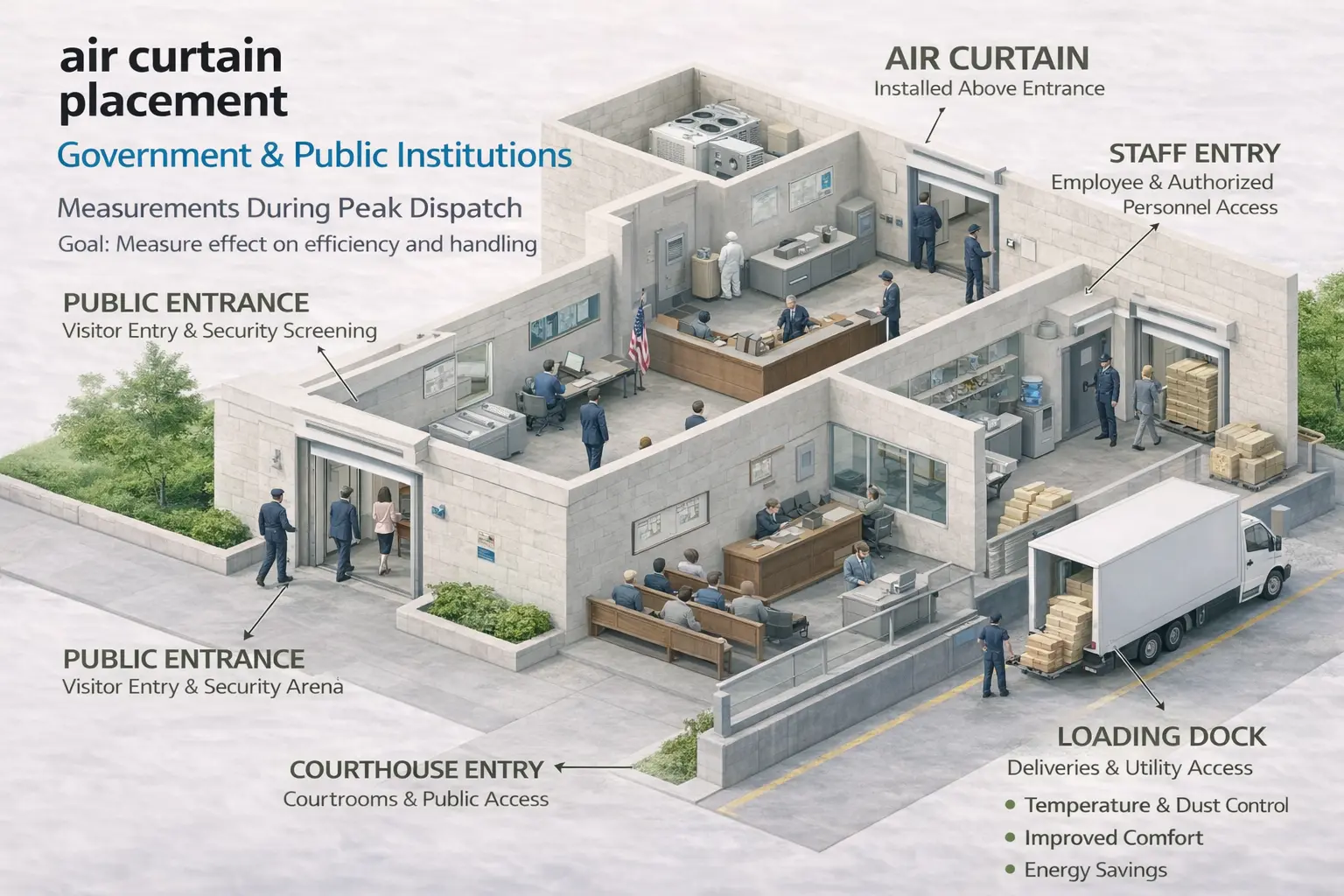
Dust and pollutants at entry points
Affects indoor air quality; raises filtration and maintenance needs
Temperature shifts in public areas
Uneven comfort near entrances, more stable inside
High energy demand
Increases utility costs and system wear
Staff and visitor discomfort
Limits efficiency and public experience
Heat or cooling loss during peak hours
Noticeable climate changes with frequent use
High operational spend
Extreme HVAC settings increase costs
High-efficiency air curtains for public service facilities
Optimized for public entrances
- ✓Strong airflow barrier
- ✓Maintain indoor comfort with balanced settings
- ✓Reduce system strain
- ✓Prevent dust, insects, and debris
- ✓Support smooth entry flow
- ✓Reliable during high use
Custom configurations
- • Mounting options for varied layouts
- • Quiet operation for safe, comfortable environments
- • Fire-rated materials
- • Integration support for new facilities
Advantages for Government and Public Institutions
Operational
- Reduces HVAC load
- Improves energy use
- Extends system life
Comfort
- Keeps indoor areas stable
- Avoids sudden drafts
- Preserves climate
Environmental
- Lowers energy demand
- Reduces peak loads
- Supports sustainability goals
Performance
- Maintains separation during:
- • High foot traffic
- • Extended open-door sessions
- • Seasonal demand peaks
- • Extreme outdoor conditions
Case Studies
City Administrative Office
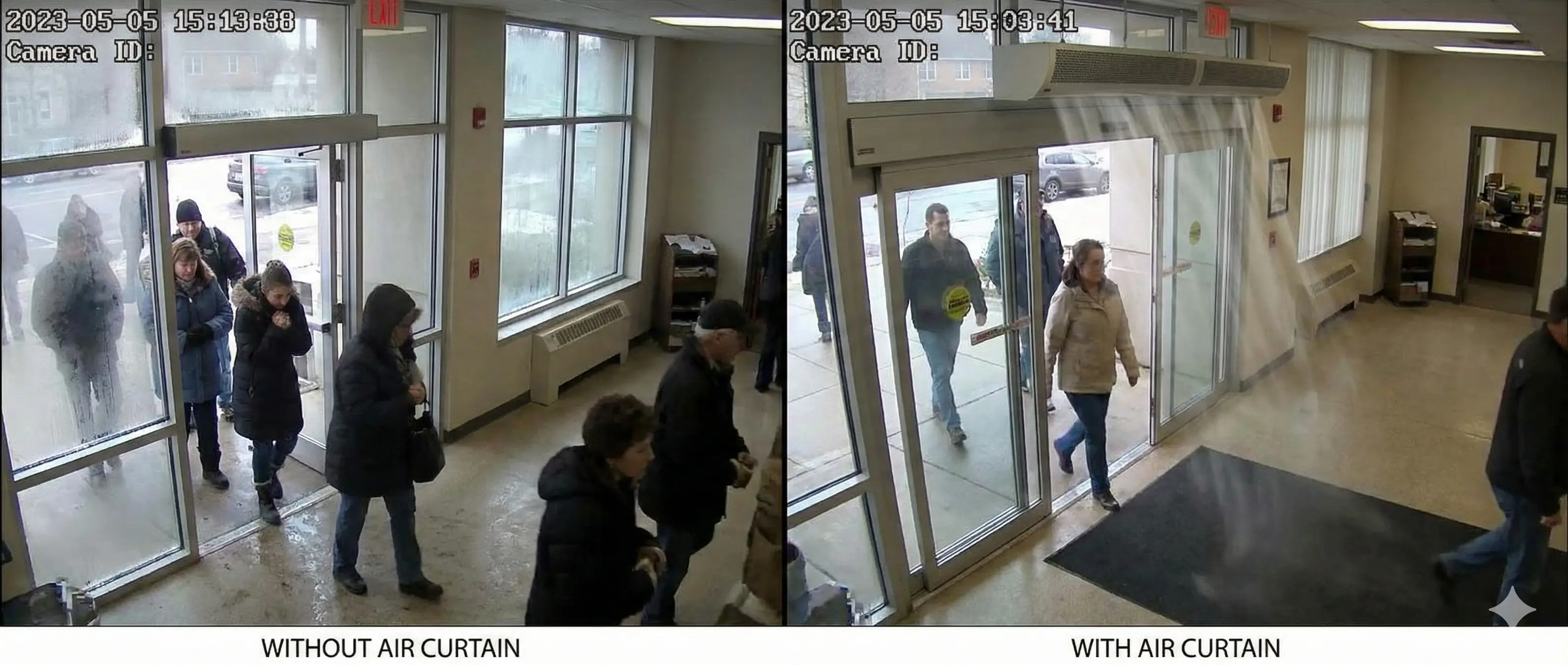
Background
- Comparison of entrance climate with air curtain vs. without
- Measurements during busy hours
- Metrics: visitor comfort, HVAC load, temperature stability
- Goal: Improve operational efficiency and public experience
Government Archive Facility
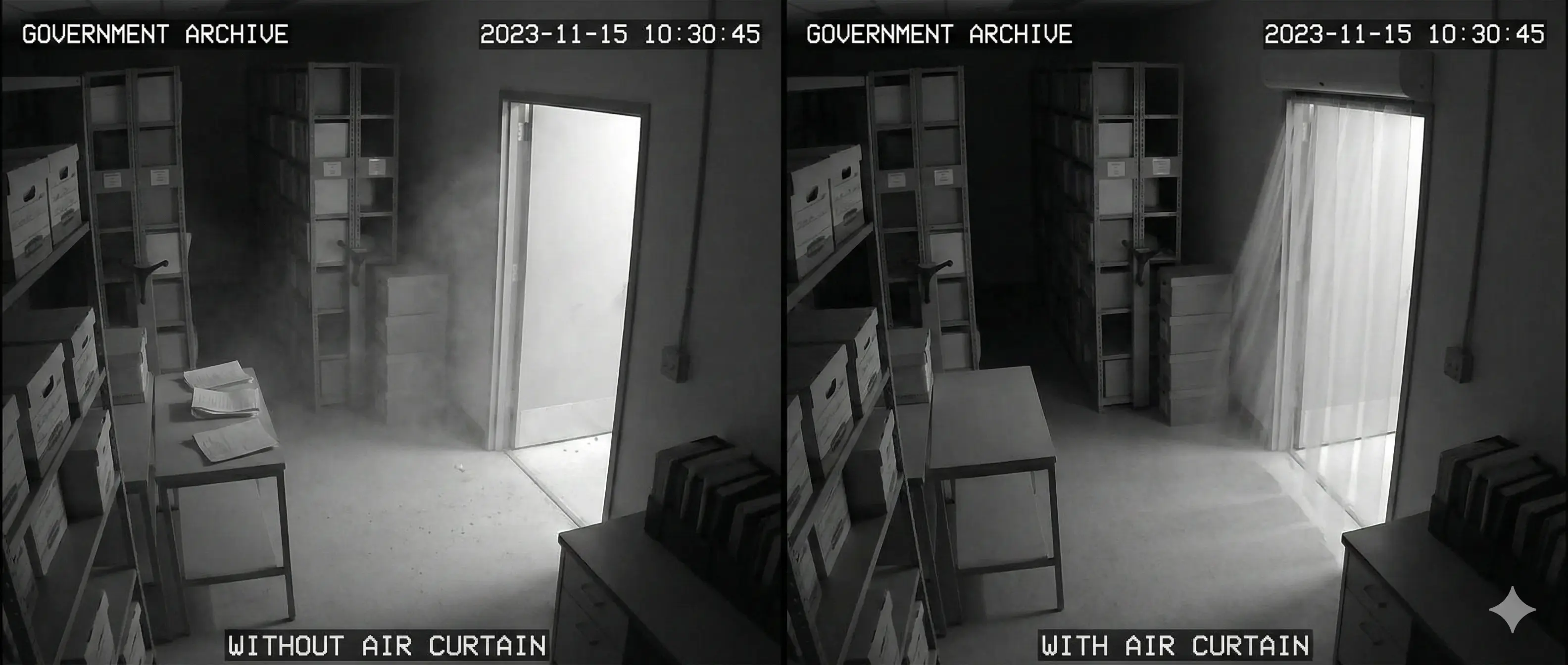
Background
- Assessment of climate protection with air curtain vs. without
- Metrics: document safety, system load, indoor stability
- Goal: Protect assets and reduce energy costs
How Air Curtains Support Government and Public Institutions
Air curtains form a protective barrier against pollutants and weather changes. Correct airflow settings safeguard public spaces, enhance safety, and conserve energy. Data shows improved stability where installed.
Suggested solutions for public facility entrances
Customer Impact Summary
- ✓Reduced discomfort
- ✓Improved energy efficiency
- ✓Stable indoor temperatures
- ✓Minimal variation during high use
- ✓Reliable system operation
- ✓Lower running costs
FAQs
Common Questions
• Yes. They reduce system load and allow moderate settings.
• Yes. Effective in high-footfall areas.
• Regular cleaning and airflow checks.
• Around 3.0–3.5 m/s is recommended.
GUIDE TO AIR CURTAINS IN GOVERNMENT AND PUBLIC INSTITUTIONS
"Best practices to save energy, maintain comfort, and protect public spaces."

Mitul Jain
Founder Mitzvah,
Managing Director