Industrial and Manufacturing sector insights
Why Industrial and Manufacturing Require Effective Air Management
Industrial and manufacturing sites depend on steady climate control, dust management, and clean access for personnel. From safeguarding equipment to ensuring worker comfort, solutions meet ongoing operational needs.
Preferred for straightforward installation, durability, and consistent results.
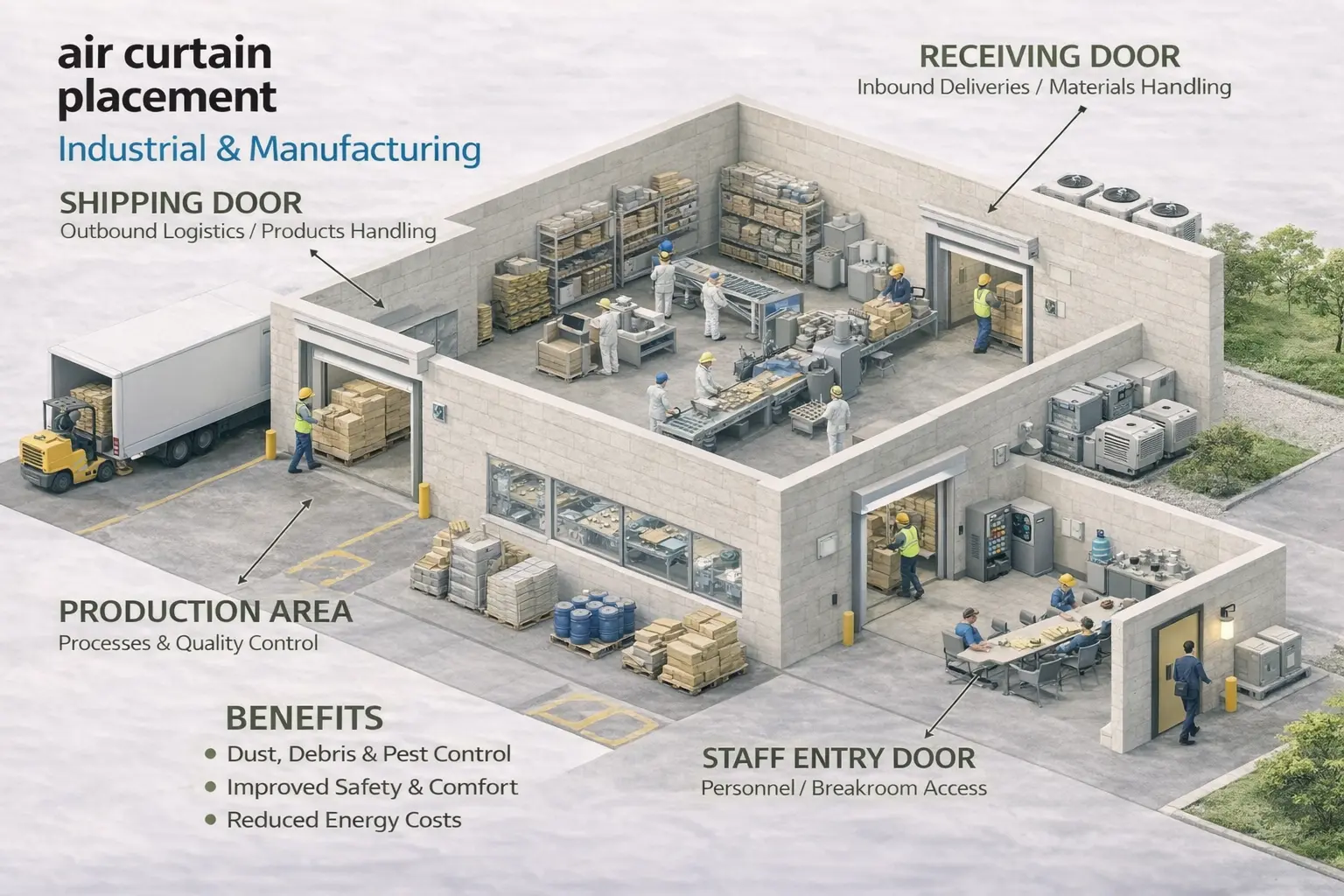
Dust and contaminants at access points
Affects product integrity; increases strain on ventilation systems
Uneven temperature across work zones
Temperature variations near doors; stable deeper inside
High ventilation and HVAC demand
Increases energy use and shortens equipment lifespan
Worker discomfort
Impacts productivity and workflow efficiency
Climate loss during peak activity
Notable temperature shifts during busy operations
High operational expenses
Extreme thermostat use raises costs
High-efficiency air curtains for industrial and manufacturing entryways
Optimized for industrial and manufacturing access points
- ✓Strong airflow separation
- ✓Maintain climate with moderate thermostat settings
- ✓Reduce HVAC demand
- ✓Prevent dust, insects, and airborne particles
- ✓Support comfort and operational flow at key access zones
- ✓Ensure consistent performance during heavy use
Custom configurations
- • Adjustable mounting for varied layouts
- • Low-noise operation for productive spaces
- • Fire-safe materials
- • Integration support for new industrial facilities
Advantages for Industrial and Manufacturing
Operational
- Reduces HVAC load
- Improves energy efficiency
- Extends system service life
Workplace Comfort
- Improves comfort near entrances
- Removes abrupt drafts
- Maintains steady indoor climate
Environmental
- Lowers energy consumption
- Reduces peak load
- Supports sustainability targets
Performance
- Sustains climate separation during:
- • High production shifts
- • Extended open-door periods
- • Seasonal output peaks
- • Severe outdoor conditions
Case Studies
Manufacturing Plant
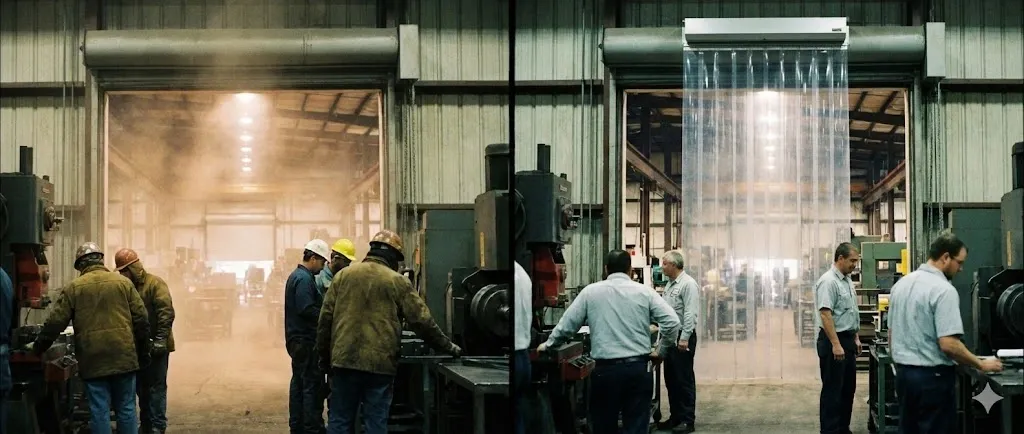
Background
- Comparison of access zone comfort with air curtain vs. without
- Data during peak work hours
- Metrics: worker comfort, HVAC load, temperature stability
- Aim: Measure effect on operational efficiency and environment control
Assembly Facility
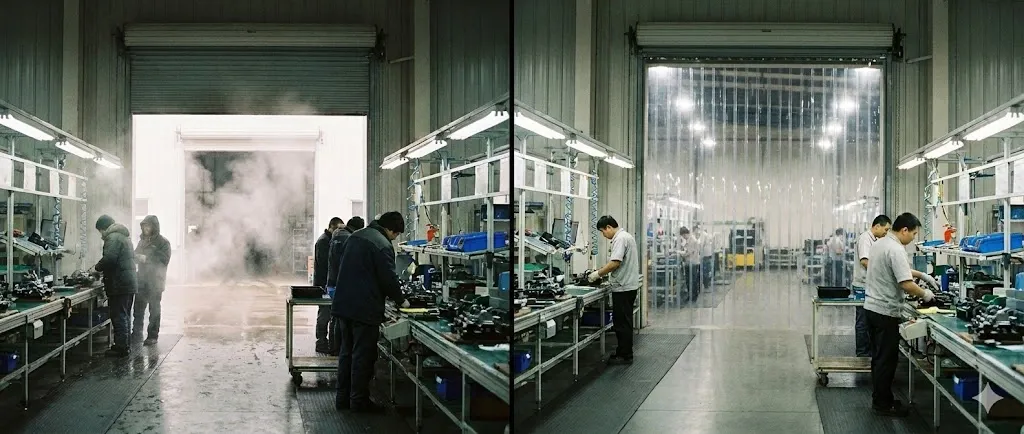
Background
- Evaluation of controlled workspace with air curtain vs. without
- Metrics: product quality, HVAC demand, climate stability
- Aim: Protect production areas and lower energy expenses
How Air Curtains Improve Industrial and Manufacturing Spaces
Air curtains create a stable airflow barrier, blocking dust, airborne particles, and outdoor climate changes from work areas. Correct speed settings help maintain comfort, safety, and energy savings.
Measurements show more consistent climate when air curtains are installed.
Suggested solutions for Industrial and Manufacturing
Operational Impact Summary
- ✓Fewer comfort issues
- ✓Improved energy use
- ✓Consistent indoor climate
- ✓Minimal changes during peak shifts
- ✓Better HVAC function
- ✓Lower running expenses
FAQs
Common Questions
• Yes. They lower load and permit moderate thermostat settings.
• Yes. They perform reliably in high-traffic zones.
• Routine cleaning and airflow maintenance.
• About 3.0–3.5 m/s for best results.
GUIDE TO AIR CURTAINS IN INDUSTRIAL AND MANUFACTURING
"Best practices to reduce energy use, improve workplace comfort, and protect production environments."

Mitul Jain
Founder Mitzvah,
Managing Director